


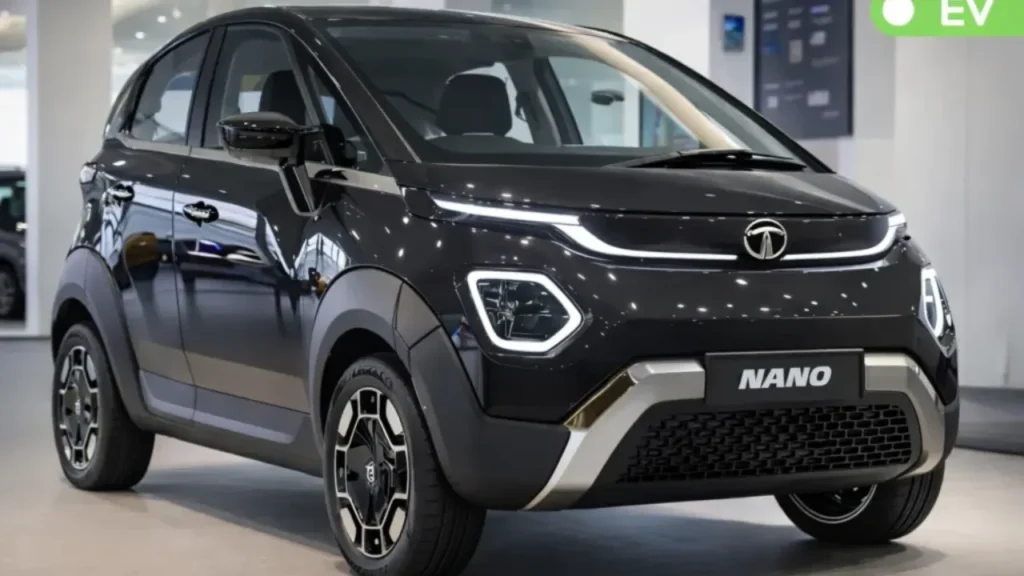
The Tata Nano EV is once again making headlines, and this time the excitement feels grounded in real needs. Earlier celebrated as India’s most affordable car, the Nano now returns in conversations as a practical electric vehicle aimed at budget-conscious households. Moreover, rising fuel prices and growing interest in EVs have made families actively search for low-cost, future-ready mobility options. Therefore, the idea of a Nano EV speaks directly to first-time car buyers and two-wheeler users planning an upgrade. Additionally, reports suggest strong range figures, usable performance, and flexible ownership plans. Consequently, many families now see the Nano EV as a realistic path toward safer four-wheeler ownership without financial strain.
Tata Nano EV Design and Build Quality
In terms of design, the Tata Nano EV is expected to stay compact and city-friendly. Moreover, its small footprint should make driving and parking easy in crowded neighborhoods and narrow streets. The tall cabin design further improves headroom and outward visibility, which adds confidence for new drivers.
However, the biggest change is likely in build quality. Tata Motors appears focused on addressing past concerns by strengthening the body structure and improving material quality. As a result, the Nano EV should meet modern safety expectations more effectively. Instead of flashy styling, the design prioritizes durability and low repair costs, which aligns perfectly with the needs of budget-focused families.
Tata Nano EV Range and Charging Convenience
One of the most talked-about aspects of the Tata Nano EV is its claimed 421 km driving range. For a budget electric car, this number stands out. Moreover, for families driving around 25–30 km daily, this range could mean charging just once a week.
Also Read: 3 Upcoming Mid-Size SUVs in India 2026 That Could Challenge Hyundai Creta
Additionally, Tata is expected to support simple home AC charging. Therefore, overnight charging using a regular household connection should be possible, even in small homes. Meanwhile, reports also suggest fast charging support, which would allow quicker top-ups when required. Consequently, range anxiety — a common concern among first-time EV buyers — could reduce significantly.
Tata Nano EV Performance and Top Speed
Despite its affordability-focused positioning, the Tata Nano EV is expected to offer usable performance. In fact, a claimed top speed of around 120 km/h suggests it can handle highways and intercity roads when necessary. Moreover, electric torque delivery should ensure smooth and quick acceleration in city traffic.
Meanwhile, the lightweight body helps maintain efficiency while keeping handling predictable. Performance tuning focuses on stability and ease of driving rather than aggressive speed. Therefore, new drivers and families transitioning from two-wheelers may find the Nano EV comfortable and confidence-inspiring.
Tata Nano EV Features and Safety Focus
The Tata Nano EV is likely to focus on essential features rather than luxury add-ons. Expected highlights include a digital instrument cluster, basic infotainment support, power windows, and air conditioning. Additionally, these features cover everyday comfort needs without pushing up the price. On the safety side, Tata Motors is expected to emphasize structural strength and basic protection. Moreover, features such as seat belts for all occupants, ABS, and improved braking performance are anticipated. Consequently, the Nano EV aims to offer a safer alternative to two-wheelers while keeping ownership costs under control.
Tata Nano EV Price, Down Payment, and Ownership Plan
Pricing plays a crucial role in the Nano EV’s appeal. According to current expectations, Tata Nano EV could be priced between ₹6.5 lakh and ₹7.5 lakh. If achieved, this would make it one of the most affordable long-range electric cars in India.
Also Read: Top 5 Best 7-Seater Family Cars in India 2026: Budget to Premium MPVs Under ₹20 Lakh
Additionally, reports suggest a down payment of around ₹75,000, paired with easy EMI options. Therefore, ownership becomes accessible even for families with limited monthly budgets. Moreover, low running costs, zero petrol expenses, and minimal maintenance further reduce financial pressure. As a result, the Nano EV positions itself as a practical electric solution rather than a luxury purchase.
| Feature | Expected Details |
|---|---|
| Powertrain | Fully electric |
| Claimed Range | Up to 421 km |
| Top Speed | Approx. 120 km/h |
| Charging | Home AC + fast charging (expected) |
| Expected Price | ₹6.5–7.5 lakh |
Why Tata Nano EV Could Change Entry-Level EV Ownership
The Tata Nano EV represents more than just a name revival. It reflects a shift toward inclusive electric mobility. Moreover, by focusing on affordability, safety, and real-world usability, Tata could open EV ownership to families who were previously excluded. On the other hand, success will depend on final pricing, safety ratings, and real-world range performance. However, if Tata delivers close to expectations, the Nano EV could reshape the entry-level EV market. Consequently, it may become a stepping stone for millions moving from two-wheelers to four-wheelers.
Final Verdict on Tata Nano EV
The Tata Nano EV carries the potential to redefine affordable electric mobility in India. By combining long range, usable speed, essential safety, and flexible ownership plans, it addresses genuine everyday needs. Therefore, for budget-focused families seeking a safe and economical electric car, the Nano EV could emerge as one of the most sensible choices in the coming years.
| FAQ | Answer |
|---|---|
| Is Tata Nano EV suitable for first-time car buyers? | Yes, it is designed for easy driving and low ownership costs. |
| What is the expected range of Tata Nano EV? | The claimed range is up to 421 km. |
Keywords: Tata Nano EV, Tata Nano electric car, affordable EV India, budget electric car