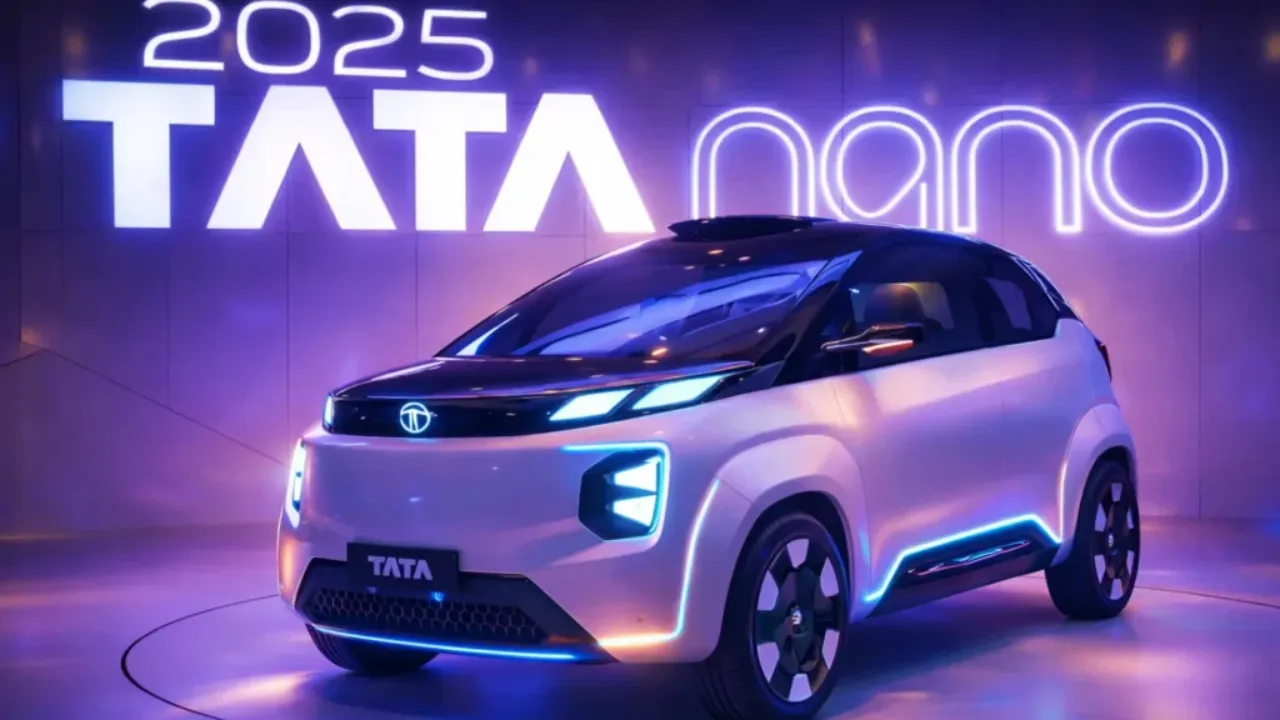
The Tata Nano EV is once again at the center of conversations across India, and this time, the excitement feels different. Earlier known as the world’s most affordable car, the Nano is now being discussed as a practical electric vehicle designed for everyday city life. Moreover, with rising fuel prices and growing EV adoption, the timing of a Nano EV comeback seems almost perfect.
Importantly, Tata Motors appears to be positioning the Nano EV as a no-nonsense, budget-friendly electric car. Therefore, it directly targets first-time car buyers, two-wheeler upgraders, and families looking for a second city car. Additionally, with a claimed 250 km range and an expected price close to ₹5 lakh, the Nano EV could finally make electric cars realistic for mass-market households.
Tata Nano EV Design and Build Quality
When it comes to design, the Tata Nano EV is expected to retain its compact and city-focused footprint. However, Tata is likely to give it a more confident and modern appearance. Short overhangs, a tall cabin, and improved proportions should make driving and parking effortless in crowded urban areas.
Moreover, build quality is expected to be a major improvement over the earlier Nano. This time, Tata seems focused on a stronger body structure and better material quality. Consequently, buyers can expect enhanced durability and improved safety. Instead of flashy styling, the emphasis remains on practicality and long-term reliability, which suits budget-conscious urban users.
Tata Nano EV Range and Charging Convenience
One of the biggest talking points of the Tata Nano EV is its claimed 250 km driving range. For daily city commuters, this range feels more than sufficient. In fact, for users driving around 20–30 km a day, a single charge could easily last several days.
Additionally, Tata is expected to keep charging simple and home-friendly. The Nano EV should support charging through a regular household socket, allowing overnight charging without special equipment. Therefore, users can avoid heavy reliance on public charging stations. As a result, overall running costs remain extremely low, which is a key reason behind the growing interest in this electric hatchback.
Tata Nano EV Performance and City Driving Experience
The Tata Nano EV is clearly tuned for city driving rather than highway performance. However, that works perfectly for its target audience. Instant electric torque ensures smooth and responsive acceleration in traffic, making daily commutes less tiring.
Meanwhile, the compact size and light steering should help new drivers feel confident behind the wheel. In addition, the silent and vibration-free nature of an electric powertrain improves overall comfort. Consequently, for two-wheeler users planning to upgrade, the Nano EV could feel like a natural and stress-free transition.
Tata Nano EV Features and Safety Focus
Instead of loading the Nano EV with unnecessary features, Tata appears to be focusing on essentials. A digital instrument cluster is expected to clearly display speed, battery level, and driving range. Moreover, a simple infotainment setup should keep controls easy to understand, especially for first-time car owners.
On the safety front, Tata is likely to emphasize a reinforced body structure and basic but effective safety equipment. Additionally, seat belts for all occupants and city-tuned braking systems should offer better protection than two-wheelers. Therefore, even at an affordable price, the Nano EV aims to deliver a safer daily commuting experience.
Tata Nano EV Price and Expected Market Impact
Perhaps the most exciting aspect of the Tata Nano EV is its expected price of around ₹5 lakh. If Tata manages to launch it at this level, it could become one of the most affordable electric cars in India. Consequently, it would directly attract buyers who previously found EVs out of reach.
Read Also: TVS Jupiter CNG 2026 Launched: Price, Mileage, Dual-Fuel Engine, EMI Plans and Features Explained
Moreover, low maintenance requirements, minimal running costs, and Tata’s wide service network further strengthen its appeal. On the other hand, competitors in the entry-level EV space may face serious pressure. Therefore, if launched as anticipated, the Nano EV could reshape the budget EV segment and bring electric car ownership closer to millions of Indian households.
| Feature | Expected Details |
|---|---|
| Powertrain | Fully electric |
| Driving Range | Up to 250 km (claimed) |
| Charging | Regular home socket |
| Body Type | Compact city hatchback |
| Expected Price | Around ₹5 lakh |
Final Thoughts on Tata Nano EV
The Tata Nano EV represents more than just a comeback—it signals a shift toward truly accessible electric mobility. By focusing on affordability, simplicity, and city practicality, Tata could once again disrupt the market. Therefore, for urban commuters looking to move beyond two-wheelers and petrol cars, the Nano EV might become the most sensible electric choice in the near future.
| FAQ | Answer |
|---|---|
| Is the Tata Nano EV suitable for daily city use? | Yes, it is designed specifically for short urban commutes. |
| What is the expected price of Tata Nano EV? | It is expected to be priced around ₹5 lakh. |





Comments